
For a long time, the Indian economy has been drifting without a credible monetary anchor.

During the month, inflation in vegetables shot up to 35.99 per cent, as against 26.10 per cent in October. Likewise, the prices of cereals and eggs grew at a faster pace of 3.71 per cent.
Chetan Ghate, Pami Dua and Ravindra Dholakia have been appointed for 4 years

With the Budget-making exercise in full swing, RBI Governor Shaktikanta Das on Friday said Budget 2021-22 is expected to be prudent and growth oriented. Das before donning the hat of RBI Governor was a career bureaucrat and was directly involved in crafting of about 10 Budgets for the country including one in the aftermath of global financial meltdown in different capacities at the finance ministry. In view of unprecedented pandemic and its impact on the economy, he said the government has maintained fiscal prudence in the response to deal with the crisis.

SBI Chairperson Arundhati Bhattacharya said any rate cut by the bank would depend on a lot many factors.
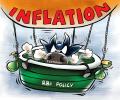
With pricing power of producers unlikely to strengthen and commodities ex-crude oil likely to remain sluggish in the immediate term, the core-WPI inflation may remain sub-zero in the rest of this calendar year.
.jpg)
The rupee had earlier this month touched a life time low of 61.21 to a dollar.

Global gold demand has seen a year-on-year decline of 8 per cent during the April-June period to 948.4 tonnes and going ahead further monetary tightening and continued dollar strength may pose headwinds, says a report. According to the WGC Gold Demand Trends Q2 2022 report, the total gold demand during the second quarter of 2021 stood at 1,031.8 tonnes. The year-on-year demand was affected by increase in gold electronic traded funds (ETFs) outflow, decline in Central banks buying and lower demand from the technology segment, the report said.

Asian Development Bank on Wednesday lowered India's economic growth forecast for FY2019 to 5.1 per cent on slowing job prospects, rural distress exacerbated by poor harvest and credit crunch. Growth in FY2020 is likely to recover thanks to this support, low oil prices, and a weakening rupee, but risks to the projections remain tilted to the downside, it said on India.

If this turns into reality, India's gross domestic product (GDP) growth will be the lowest since 2012-13, which could severely hit job creation and income growth in the near term.

The retail inflation rate breached the 6 per cent upper tolerance limit of the RBI for the first time in seven months in January, while the wholesale price index stayed in double-digits for the 10th month in a row, showed two sets of data released by the government on Monday. Retail inflation, the key input for the RBI while reviewing the repo rate every two months, soared during the month mainly because of a spike in certain food items. The previous high for retail inflation was 6.26 per cent in June 2021.

The Nikkei India Services PMI posted above the critical 50.0 level, which separates growth from contraction, for the fourth month running in May.
There is a near consensus that at least a 25 basis points cut, if not 50, can be expected in the June policy.

India's GDP may turn positive at 1.3 per cent in the third quarter of 2020-21, having witnessed contraction in the previous two quarters due to the coronavirus pandemic, as the number of cases is falling and public spending has started rising, according to a report. The government will release the GDP numbers for the October-December quarter of the current fiscal on Friday. Projecting that the gross domestic product (GDP) may have returned to the black in the last quarter of the calendar year 2020, DBS Bank in the report said the full-year growth in real terms may be at a negative 6.8 per cent.

The consumer durables segment declined by 23.4 per cent in June, as against a dip of 10.1 per cent a year ago.

RBI may go for a 25-basis point cut at its February policy meet.

In the June quarter of FY24, 51 per cent of consumers who took small-ticket personal loans already had more than four credit products at the time of accessing yet another new loan, compared with just 17 per cent in the June quarter of FY20, points out Tamal Bandyopadhyay.

The agency attributed the sharp revision to various high-frequency indicators showing a softness and partly blamed the same to reforms like GST, real estate regulation, and the bankruptcy code which are still a "drag" on the economy.
RBI's intention to keep its target inflation rate at 5% was the main reason behind keeping rates unchanged, says Adhil Shetty, CEO of BankBazaar.com.
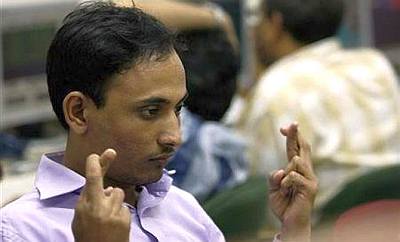
Markets closed the day in green on favourable domestic factors,

Reserve Bank Governor Raghuram Rajan is widely expected to hold the key rates citing high inflation at the fourth bi-monthly monetary policy announcement on Tuesday, even though the pro-growth lobby has been wishing for a rate cut.

However, it may still not change its stance on the policy rate as inflationary pressures are coming from high commodity prices.

"The theme of tomorrow's meeting is 'Economic Policy Reform, Road Ahead'. The prime minister will make opening remarks. There are 15 invitees who will make their presentations before the prime minister," a senior government official said.

India's industrial production contracted by 3.6 per cent in February, official data showed on Monday. According to the Index of Industrial Production (IIP) data released by the National Statistical Office (NSO), manufacturing sector output declined by 3.7 per cent in February 2021. Retail inflation rose to 5.52 per cent in March, mainly on account of higher food prices, government data showed on Monday. The consumer price index (CPI) based retail inflation stood at 5.03 per cent in February.

The Governor said the MPC had voted to maintain its accommodative stance, implying more rate cuts in the future if the need arises.

Here are the key decisions announced by the Reserve Bank of India on Thursday.

Broader markets are outperforming the benchmark indices- BSE Midcap and Smallcap indices are up 0.8%-1%.

Growth in the third quarter (October-December) is expected to be the weakest in years, with spending hit due to unavailability of enough replacement currency.
.jpg)
The global brokerage firm in March had trimmed the growth forecast to 6 per cent and in June again it revised the growth estimate to 5.8 per cent.

Bankers said high interest rate could make Indian economy sluggish given that inflation is around 5%

India's largest private sector lender ICICI Bank has hit the Chinese debt market for a benchmark issue of about $500 million.

We asked colleagues, present and past, to reflect on a man who has made such a difference to their lives and careers. Here it is then, a rich collection of memories that offer enchanting glimpses of the enigmatic Ajit Balakrishnan.

Common use products like hair oil, soaps and toothpaste will be charged with a single national sales tax or GST of 18 per cent instead of present 22-24 per cent

Earlier, the RBI cut its policy interest rate to 6.75 per cent.
The Reserve Bank of India (RBI) on Friday decided to leave the benchmark interest rate unchanged at 4 per cent but maintained an accommodative stance, implying rate cuts in the future if need arises to support the economy hit by the Covid-19 pandemic.

Calling out the high real interest rates -- the differential between the policy rate and headline inflation -- as an impediment to investment, the SBI report said the RBI can cut rates by 0.35-0.50 per cent at its next policy announcement.

The BSE Mid-Cap index was currently up 0.83%. The BSE Small-Cap index was currently up 0.8%.

There is a narrow chance that the central bank may cut rates in the future, according to a poll of 15 economists and treasurers.

Linking all new floating rate loans to an external benchmark won't impact existing borrowers, so customers who have taken long-term home loans recently should watch things carefully, say Joydeep Ghosh and Sanjay Kumar Singh.

The government plans to bring down its stake to 26 per cent in these two banks, which are yet to be identified. This may not come in the way of getting investors for these banks, provided the government is willing to step back rather than run them the way it had been doing for over five decades since these banks were nationalised, points out Tamal Bandyopadhyay.
 © 2026 Rediff.com - Advertise with us - Disclaimer - Privacy Policy - Sitemap - Feedback - About us - Terms of use - Grievances